
BPC-157 and TB-500 Benefits: The Wolverine Stack Explained
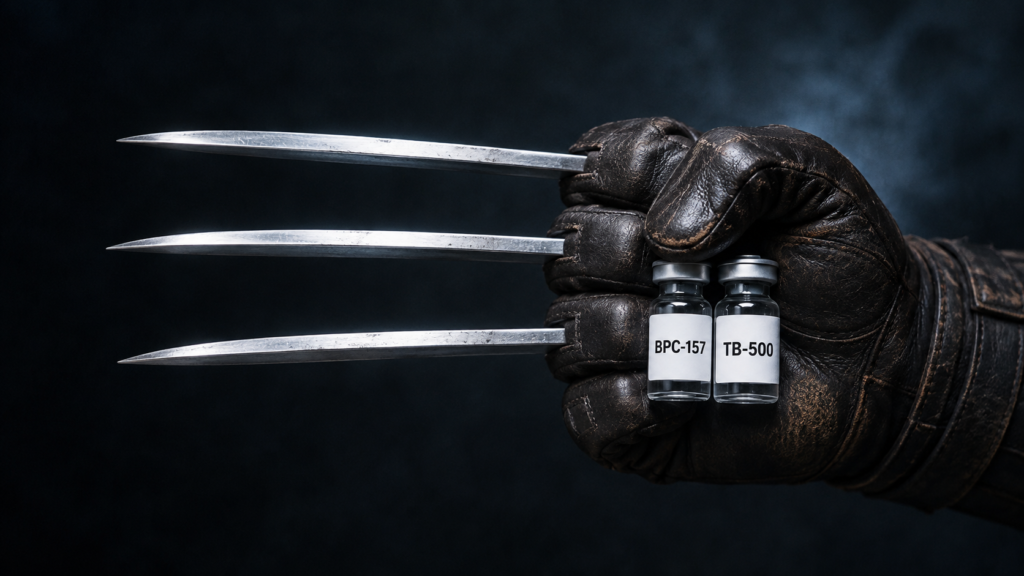
BPC-157 and TB-500 are two recovery peptides commonly researched together. This combination is often called the Wolverine Stack because of its potential connection to tissue repair, injury recovery and the body’s natural healing processes.
The nickname comes from Wolverine, the Marvel character known for recovering rapidly from almost any injury. Although real-world biology is not quite that dramatic, the name reflects why BPC-157 and TB-500 have attracted so much attention.
Both peptides are being studied for their possible recovery benefits, but they may approach the repair process in slightly different ways. This is why researchers and peptide communities frequently discuss using BPC-157 and TB-500 together.
What Is the BPC-157 and TB-500 Wolverine Stack?
The Wolverine Stack is the name given to the combination of BPC-157 and TB-500.
In simple terms, BPC-157 is mainly associated with research into targeted tissue repair, while TB-500 is associated with cell movement and broader soft-tissue recovery.
The theory behind combining them is straightforward:
- BPC-157 may help create an environment that supports tissue repair.
- TB-500 may help the cells involved in repair move around the body.
This has made the BPC-157 and TB-500 stack especially popular in research surrounding tendons, ligaments, muscles, joints and other soft tissues.
However, the Wolverine Stack has not been proven as a medical treatment through large human clinical trials. Most of the positive evidence currently comes from laboratory and animal research.
Why Are BPC-157 and TB-500 Used Together?
The main attraction of the BPC-157 and TB-500 Wolverine Stack is that the two peptides may influence different parts of the repair process.
BPC-157 is generally associated with creating a supportive environment around damaged tendons, ligaments, muscles and digestive tissue.
TB-500 is more commonly associated with the movement of cells involved in repair and broader soft-tissue recovery.
A simple way to understand the Wolverine Stack is:
BPC-157 may help support the repair environment, while TB-500 may help mobilise the repair team.
This complementary theory is what has made the combination so popular. However, there is currently no high-quality clinical evidence proving that combining the two produces faster or better healing in humans.
What Are the Potential Wolverine Stack Benefits?
Research interest in the Wolverine Stack generally focuses on the following areas:
- Supporting tendon and ligament recovery
- Supporting muscle and soft-tissue repair
- Encouraging healthy blood flow around damaged tissue
- Supporting the movement of repair cells
- Helping regulate inflammatory processes
- Supporting overall injury-recovery research
These are potential research areas—not guaranteed outcomes or approved medical benefits.
Are BPC-157 and TB-500 Proven to Work?
BPC-157, TB-500 and the Wolverine Stack remain investigational compounds.
Preclinical research has produced promising findings, particularly around tissue repair, cell movement and blood-vessel formation. However, human evidence remains extremely limited.
There are currently no large, high-quality human clinical trials proving that BPC-157 and TB-500 safely accelerate recovery from injuries. Their long-term effects, safe human dosages and possible interactions have not been properly established.
The FDA has also identified concerns involving limited safety information, possible immune reactions, peptide impurities and product quality.
The Bottom Line
The BPC-157 and TB-500 Wolverine Stack has attracted attention because the two peptides may influence different parts of the body’s natural repair process.
BPC-157 is mainly associated with research into tendons, ligaments, muscles and digestive tissue. TB-500 is associated with cell movement, blood-vessel formation and broader soft-tissue recovery.
Together, they represent an interesting area of recovery-peptide research. However, the scientific evidence remains at an early stage. Most positive findings come from laboratory or animal studies, and significantly more human research is needed before either peptide can be considered a proven treatment.
Research disclaimer: BPC-157 and TB-500 are investigational compounds and are not approved medicines for human use. This article is provided for educational purposes only and does not provide medical advice or instructions for human consumption.
Research References
- Chang, C.H. et al. (2011). The promoting effect of BPC-157 on tendon healing.
- Malinda, K.M. et al. (1999). Thymosin beta-4 accelerates wound healing.
- McGuire, F.P. et al. (2025). Regeneration or Risk? A Narrative Review of BPC-157.
- U.S. Food and Drug Administration. Safety risks associated with certain bulk drug substances.